For over 15 years, I’ve carried a singular, perhaps slightly crazy obsession: I wanted to recreate Paul McCartney’s entire touring rig from the 1970s. I’m not just talking about the instruments; I wanted the whole thing; the amplifiers, the audio equipment, and the massive, iconic staging. It was a daunting task because most of this gear was manufactured over 50 years ago. Many of these pieces are now prized collector’s items, literally hanging on people’s living room walls or sitting behind glass. But I didn’t want them as museum pieces; I wanted to get them back to doing exactly what they were built for: being played.
While hunting down the rare instruments was a challenge in itself, recreating the staging felt almost impossible. The original set was a one-off design specifically for Paul’s ’70s tours, and it has long since vanished. To make matters more complicated, the original designer passed away decades ago, and any blueprints or technical drawings have been lost to time.
I had to become a bit of a detective. I managed to befriend some of the original crew members who worked for a company called Showco in the U.S. back in the day. Even though I come from an engineering family (my father was a civil engineer) I had to learn a lot from scratch. I’ve always joked that if I weren’t a musician, I’d be an engineer, because I love the creative process of building things.
I spent hours communicating with the Showco crew, trying to figure out the “internals” that you simply can’t see in old concert footage. One of the most vital secrets they shared was how the stage actually broke down for transport. Even back in the ’70s, the loading space of an 18-wheeler was only 8 feet wide, but some of our stage pieces were wider than that. They taught me how the original rig was split into individual components to fit into the trucks. I also got invaluable “backstage” insights from Howie Casey, who played saxophone in Wings, and my late friend John from Alabama, a super-fan who knew every nut and bolt of the Wings over America tour.
In April 2024, I finally pulled the trigger on the build for our residency on Mackinac Island. I spent 16 hours a day in the shop, armed with little more than a saw, a drill, a measuring tape, and some screws. I decided to build the set in four major components:
- The Drum Riser: I started here, in the middle, and built outward.
- The Piano Riser: This was the toughest; a circular beast 10 feet in diameter.
- The Keyboard Riser: The home for the Mellotron, Fender Rhodes, and organ where Linda mostly performed.
- The Guitar Amp Riser: The “wall” of sound.
Interestingly, I figured out the dimensions of the stage pieces by measuring the vintage amplifiers I already owned. Since I knew the exact size of the gear sitting on the risers in the old photos, I could calculate the height and width of the staging itself. When I finally checked my math with the Showco crew, I was thrilled to find I wasn’t far off.

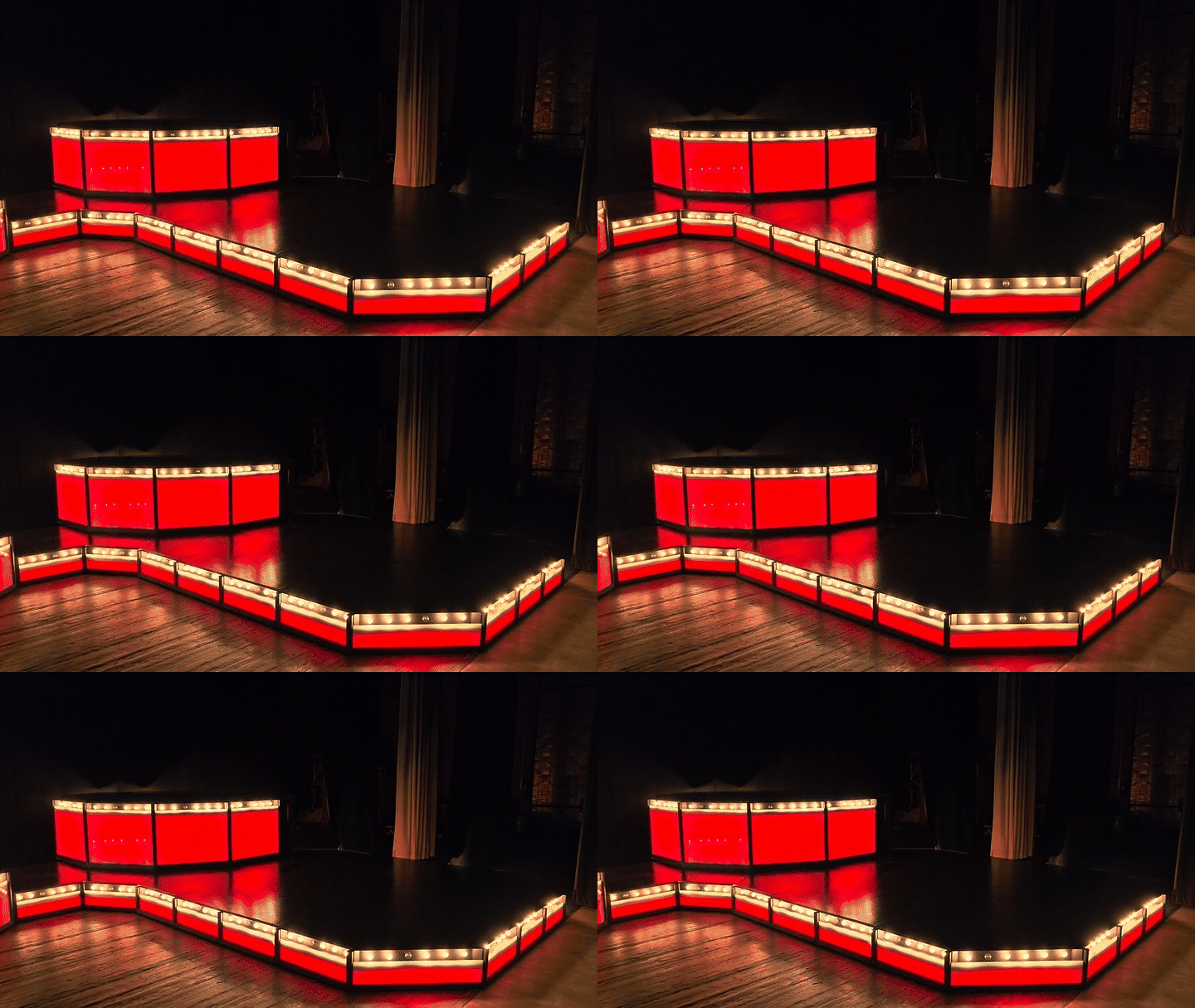
Authenticity was my North Star. When it came to the lighting, I made an executive decision to ditch modern, lightweight LEDs. Instead, I ordered nearly 300 individual light bulbs to recreate the authentic chasing-light patterns of the 1970s. Since there was no modern equipment that could mimic that vintage behavior, I actually built a basic computer from scratch to run the programs. This “brain” controls the chasing lights and the panels that are backlit in red, yellow, blue, and green. I even built a custom remote with a long cable so my sound engineer, Kevin, could trigger the light shows from the front of house.
The final stretch in May was a marathon. We were rehearsing 8 to 12 hours a day to nail the music and the original choreography, and then I would spend the remaining hours building the stage. I was pulling 20-hour days just to hit our May 24th deadline.
In a true rock-and-roll finish, I was still painting the staging just two days before opening night; the paint was barely dry when we took the stage. But we made it. We opened on May 24th for the first of 76 back-to-back concerts. Looking out at that rig now, with the lights chasing and the vintage gear humming, it feels like we’ve built more than just a stage; we’ve built a time machine!