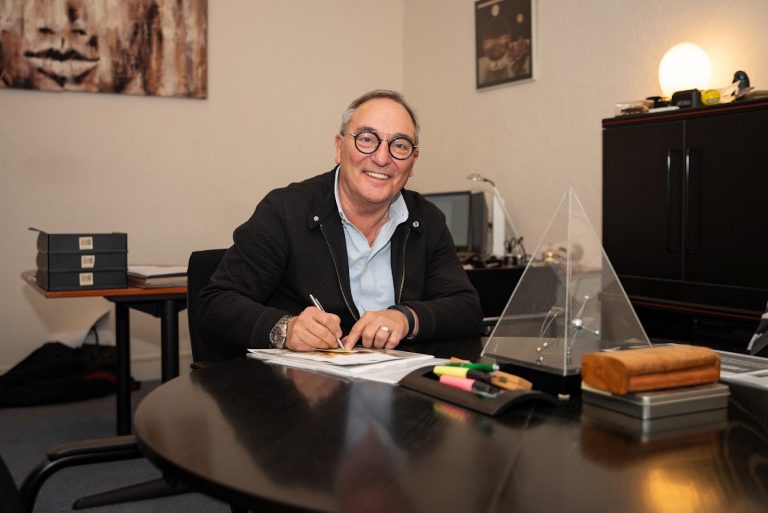
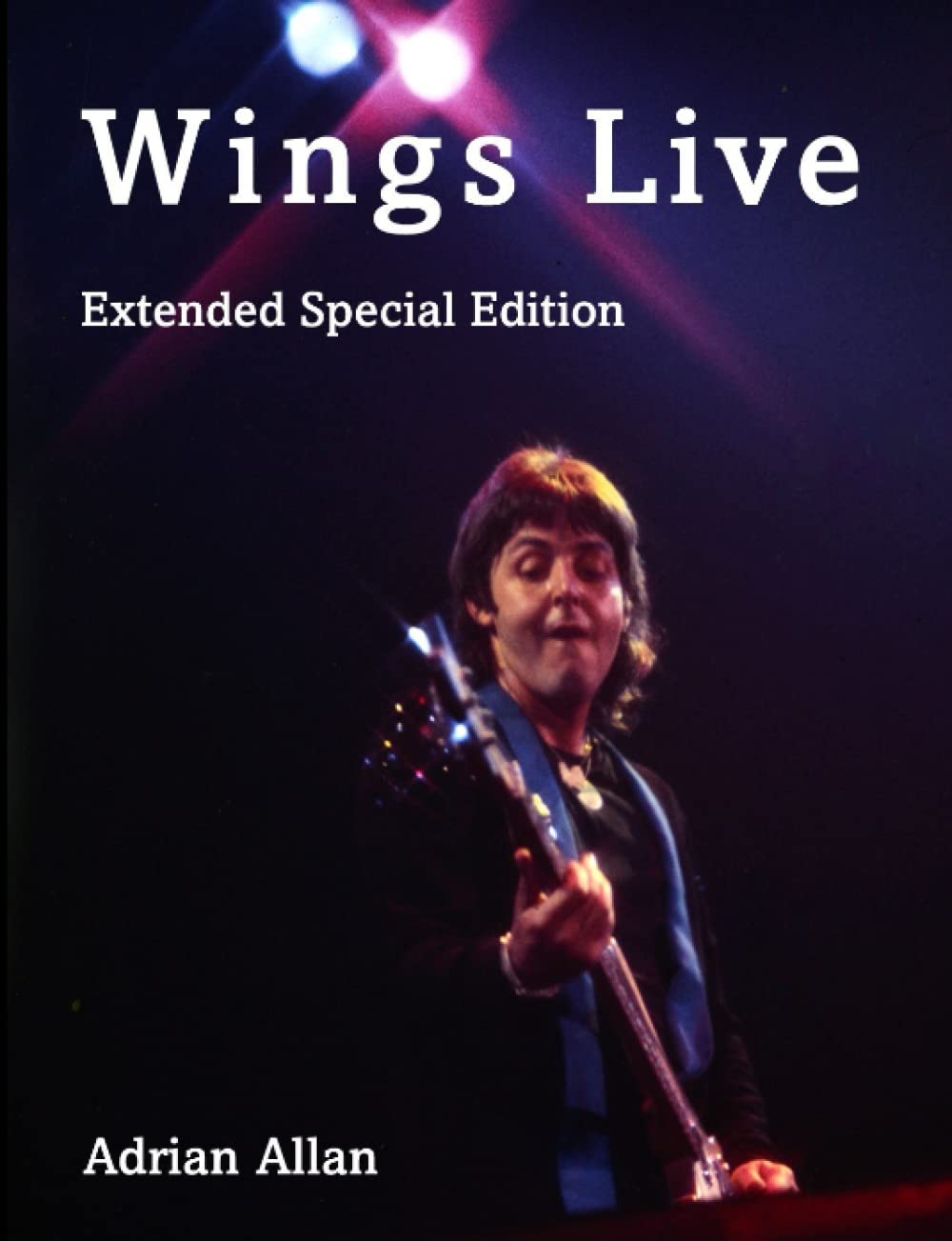
In April 2022, Yuri sat down with acclaimed British author Adrian Allen for an in-depth interview about the legendary Wings Over America tour. Allen, best known for his book Wings Live, invited Yuri to contribute his extensive knowledge of Paul McCartney & Wings’ landmark 1975–76 Wings Over the World tour. The interview explores the history, performances, musicianship, and lasting legacy of one of the most celebrated live tours in rock history, and formed part of the research behind Allen’s book.
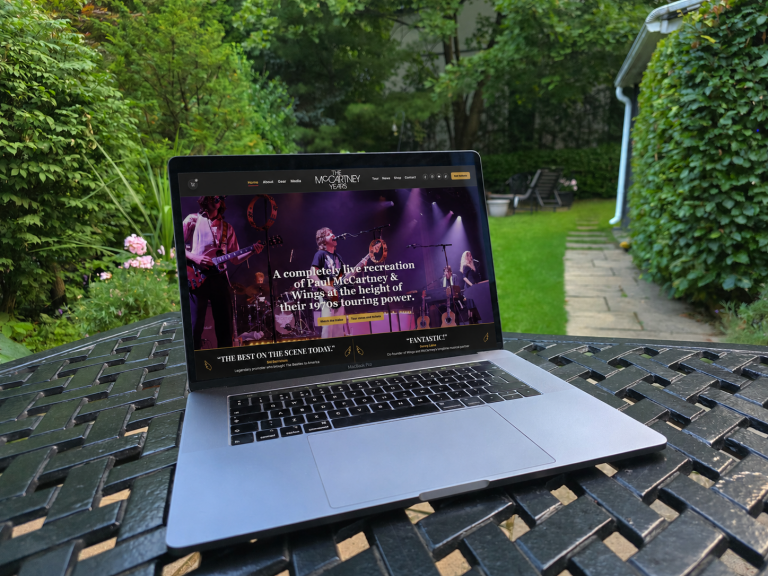
Adrian: Yuri Pool is the founder and lead singer of ‘The McCartney Years’, an international touring show that recreates Paul McCartney’s live touring career of the 1970s and most notably the ‘Wings Over America’ era. His dedication to Paul’s life and work in Wings has earned him numerous accolades, including from people who worked for and with Wings in the 1970s. He lives in Canada with his three children Julian, Fínna, and Sutton and, much like Paul McCartney, enjoys life on his farm surrounded by his family and animals.
Adrian: When did you first start playing, and when did you develop an interest in the music of Wings?
Yuri: I was born and raised amidst the flower fields in The Netherlands. We traveled a lot during my childhood, living in Dubai and Nigeria. My family is actually devoid of musicians; I am considered the outlier because nobody else plays an instrument. However, my father was a huge Beatles fan and had all their records.
When I was a child, I secretly listened to his collection, and hearing “A Hard Day’s Night” was a religious experience for me. I was hooked. It was actually John Lennon who first inspired me to play because I wanted to be a rhythm guitar player, though I have always been a singer.
I didn’t develop an interest in Wings until high school when my father gave me the compilation album All The Best. Hearing “Band On The Run” followed by the high energy of “Jet” was a defining moment that changed the direction of my musical interests forever. Later, while playing piano in an art gallery in Den Helder, the owner told me I had Paul McCartney’s vocal range, and that stuck with me.
Adrian: Your decision to focus on Wings rather than The Beatles reminds me of why I decided to write these books. I knew that well over 2,000 books had been devoted to The Beatles but there are still only a small handful about Wings. I felt confident with the subject matter, as I’ve been a fan since my teens.
Yuri: We really are thinking alike. The Beatles’ history is so well-documented, but there isn’t enough of a historical record regarding what happened directly after them in the early 1970s.
My interest in the mid-70s touring years only increased over time. I built this band before the high-definition footage of Rockshow was released, so I had to figure out the instrumentation from grainy VHS versions and phone calls to knowledgeable people. When the remastered footage was finally released in 2014, I had already figured out most of the fine details, but attending the launch with the band was the cherry on the pie. We’ve even attracted people who worked on the original tour, like crew member Peter Morley and saxophonist Howie Casey, who provided insights that helped make us the most authentic touring production of McCartney’s music today.
Adrian: I don’t suppose you’ve tried to replicate some of the more extravagant stage effects of the Wings over America tour, such as the smoke and bubble machines, lasers and fireworks.
Yuri: Many of the venues we perform in are “soft seaters,” like the Royal Albert Hall, where you can’t really bring in pyrotechnics or bubble machines because of the mess. While we have played arenas, they aren’t our main market.
However, I believe the stage setup and equipment are what truly determine the sound. I have spent my career researching and acquiring the original instruments used on that tour: the Hammond C3, the Clavinet D6, Ovationacoustic guitars, and even the Steinway Model A grand piano. We are essentially a traveling museum of vintage gear.
Adrian: How hard was it finding like-minded musicians who had a similar interest in Wings?
Yuri: I hardly do auditions. Most of my band members have been with me for over ten years and were hired based on their reputation or recommendations. I think that’s the best way to go about it—I don’t think Paul himself auditioned people off the streets either.
Adrian: Are there any Wings songs that stand out as being more difficult to learn and play than others?
Yuri: McCartney’s music is complex; if it were easy, everyone would do it. It’s hard to narrow it down to one song. But a show is about more than just the songs—it’s about the flow, the lighting, and the choreography.
I’ve made some minor adjustments to the setlist compared to the original ’75-’76 tour. Back then, Paul was heavily promoting albums like At The Speed of Sound, but some of those songs had less commercial success over the decades. I substitute them with songs that McCartney considered for the tour but didn’t include at the time, such as “Nineteen Hundred And Eighty Five”.
Adrian: I’m sure you are aware that Junior’s Farm was played in the Australian leg of the tour but was dropped from the setlist, as Wings couldn’t quite get it right live.
Yuri: We play it! We substitute it for “Hi, Hi, Hi” because they both have the same energy level.
Adrian: Then you managed to pull off something that Wings couldn’t do live! How do you learn new songs? I imagine you’ve had to learn most of the material by ear.
Yuri: I can’t read notes; I’ve done everything by ear since I was a young teenager. As technology improved, I started using audio processors to slow down audio files by about 20%. That allowed me to hear the music in “high definition” and catch the fine details. I never use tabs because I find them distracting; you end up relying on someone else’s ears instead of your own.
Adrian: The horn parts were originally arranged by Tony Dorsey. In the absence of these parts being available, did your horn players have to go through the same process of working things out by ear?
Yuri: We used video footage to see the four players; Thaddeus Richard, Howie Casey, Steve Howard, and Tony Dorsey and identify when they switched instruments. Once you know what the instruments sound like, it’s fairly easy to chart them. With a little help from my friends, I was able to get everything down on paper.
Adrian: Have you considered doing some of the earlier stuff, such as from the 1972-3 tours with the first line-up, or the songs from the 1979 tour?
Yuri: Commercially, it’s a different story. While the ’72 tour was great, its commercial value as a full show today might be too narrow. We do occasionally perform “Smile Away” or “Long Tall Sally,” but Wings Over America remains the basis because it speaks for itself.
Adrian: Do you think that Coming Up and Goodnight Tonight – both of which are well-known songs – would have commercial appeal if you were looking to do a few tracks from 1979?
Yuri: Absolutely, they are great songs. But they lie outside our specific era. Expanding the timeline too much would take away from the original concept and require costume changes, which I think is silly. We are a concert experience, not a theatrical act.
Adrian: Why do you think that the `75-6 line-up and tour is often seen as the peak of Wings? What was so special about that line-up and the tour?
Yuri: By 1976, McCartney had rediscovered himself as a solo artist and established songwriter outside of The Beatles. He became the Paul McCartney we know today. He built Wings from the ruins of The Beatles exactly the way he wanted.
He was calculating in choosing his band. He needed someone like Denny Laine (performed by David Usselman in our band), who was a gifted multi-instrumentalist. He had Jimmy McCulloch, whose guitar playing was incredibly well-defined. Braden DeCooman, who played Jimmy in our show for years, performed those parts effortlessly before he passed away in 2018. Then there was the powerhouse drummer Joe English and the stellar horn section. All of this made them a truly stellar band.
Adrian: What is your band doing now, and what are your plans for the future?
Yuri: We just finished a tour of the United States and will be celebrating our 15th anniversary in London, Ontario, where it all started.
I have ambitions to grow the show even further, including returning to Europe and bringing the show to Australia. However, after 15 years on the road, we are taking some time off. I’ve decided that having more time for the children is more important than anything else right now. The band has always been a family affair; we travel with the kids in tow, much like the McCartneys did. It’s been an enriching experience for all of us, but striking a delicate balance between the road and family life is what keeps the lifestyle sustainable.
Adrian: I hope to see you here in England, as we’d love to see the show over here. Many thanks for taking the time to talk to me today.
Yuri: You’re welcome.